
Fulton City Directory Shelf
The Central Library Special Collections city-directory shelf is the main access point. It holds three distinct series: Atlanta alphabetical books, suburban directories, and Haines Criss-Cross volumes. Together they span from the city's nineteenth-century growth into the early digital era. All are available for walk-in research, and staff can answer questions or arrange an appointment by email.
| Collection | Years | Where Held | Access |
|---|---|---|---|
| Atlanta city directories | 1859-1860 through 1991; comprehensive shelf from 1867 | Central Library Special Collections | Walk-in alphabetical lookup; selected scans online |
| Atlanta suburban directories | 1953-1986 | Central Library Special Collections | Walk-in, useful beyond the historic core |
| Haines Criss-Cross | 1946-2016/17 | Central Library Special Collections | Walk-in address, street, and telephone sequence |
| Georgia census microfilm | 1820-1880 and 1900-1930 | Central Library Georgia Collection | Reading-room household comparison |
| Atlanta Sanborn maps | 1886 and later; 1899 set verified | Library of Congress and local collections | Free digitized sheets and research-room copies |
Publishers and titles changed across the runs. Early local publishers gave way in part to R. L. Polk titles, while Haines issued the reverse series. The library's official page verifies the broad spans, not a publisher for every year. Check the title page before citing an edition. Individual years may also be absent, so confirm shelf coverage with staff rather than assuming an annual sequence is complete.
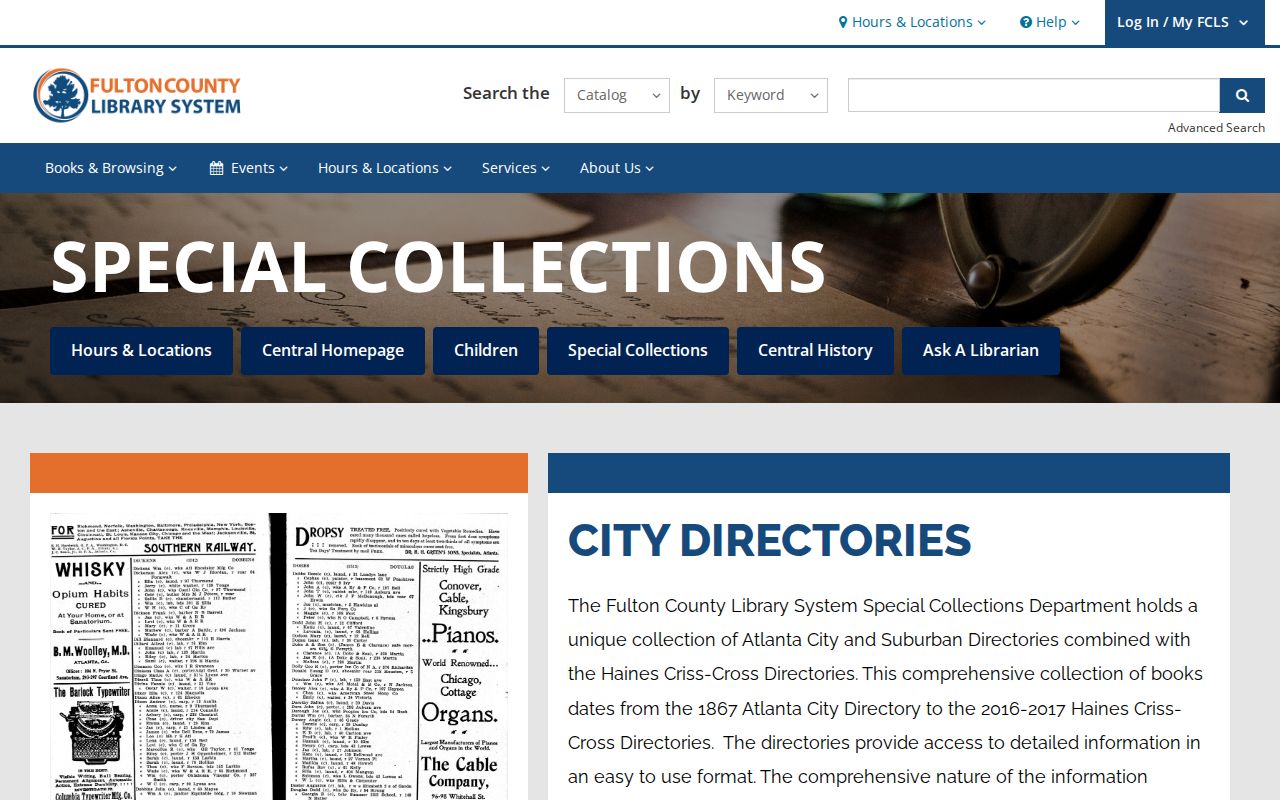
Fulton Directories Span Generations
The Fulton library's directory continuum reaches from 1859-1860 to 2016-2017 across the three main series. The Atlanta alphabetical run ends in 1991, while Haines reverse volumes continue about twenty-five years longer. That overlap lets a researcher switch methods as the shelf changes: surname-first for early books, then address-first or telephone sequence in later Haines volumes.
The range follows Fulton County's growth from a compact Atlanta core to postwar suburbs and later metropolitan development. It does not mean every resident appears. Early publishers could omit people, use initials, segregate listings, or follow conventions that underrepresented Black Atlantans and other communities. Absence from one edition must be tested against other collections.
| 1859-1860 | Earliest Atlanta directory span named by the library |
|---|---|
| 1867 | Start of the library's described comprehensive Atlanta books |
| 1946 | Haines Criss-Cross series begins |
| 1953 | Suburban directory series begins |
| 1986 | Suburban run ends |
| 1991 | Atlanta alphabetical run ends |
| 2016-2017 | Last Haines span listed |
Research Fulton Directories In Person
Central Library Special Collections is the documented home for every directory series above. The same department provides street-name-change and address-level information, which is especially helpful when a structure appears under a different number. Contact Library.SpecColl@fultoncountyga.gov with the target surname, address, and date range, or visit the collection in person.
The Georgia Collection adds census microfilm, newspapers, maps, and vertical files of clippings about Atlanta and Fulton people and places. Its hard-copy local maps reach from the late nineteenth century through the 2000s. These sources let a city directory entry be tested rather than copied in isolation.
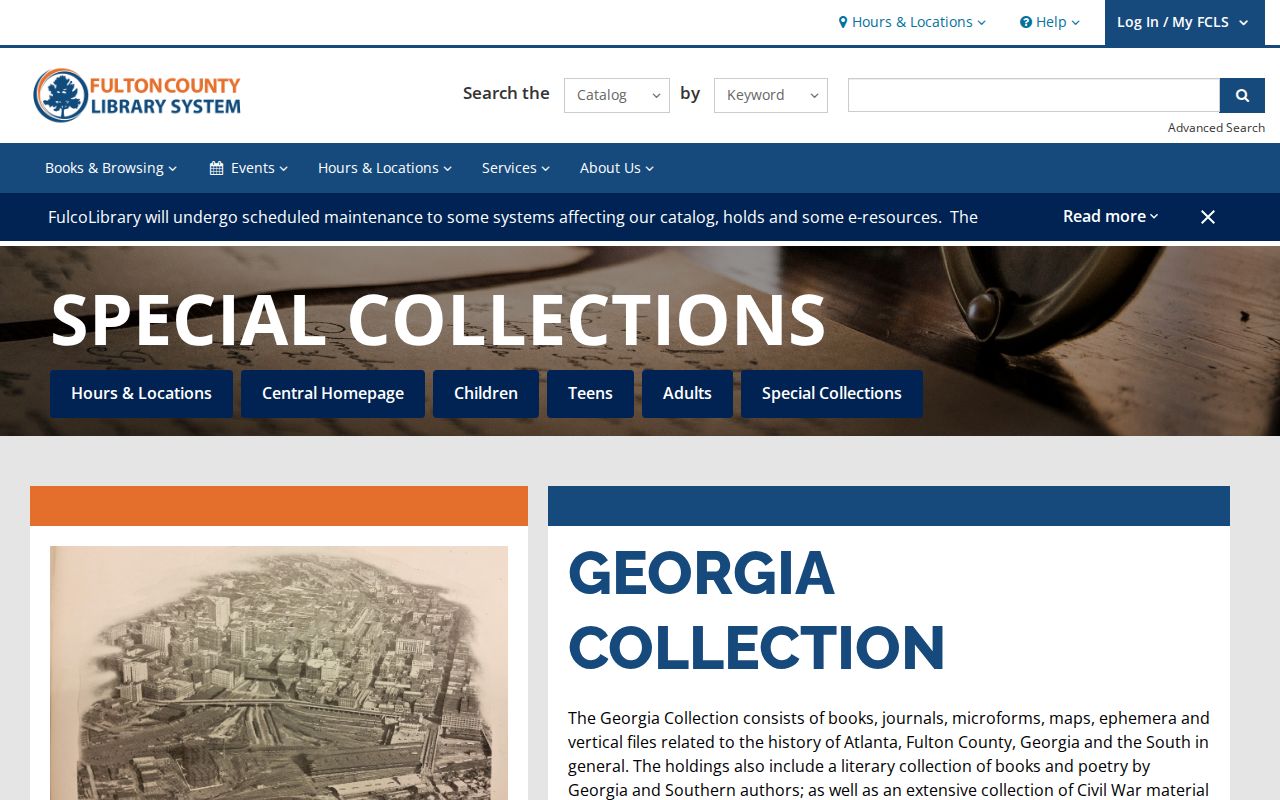
Read a Fulton City Directory Entry
Begin with the title page and abbreviation key. An alphabetical entry may give surname, first name or initial, spouse in parentheses, a widow marker, occupation, employer, home indicator, and residence address. A business entry may use a room or office address instead. Conventions vary by year, so never expand an initial or abbreviation without checking that edition.
| Name | Surname, given name or initial, and sometimes spouse |
|---|---|
| Work | Occupation and often employer or workplace |
| Home | House number, street, and an edition-specific home mark |
| Other residence | Boarding, rooms, or another status as the key defines it |
| Widow notation | “Wid” followed by a deceased spouse under some conventions |
- Criss-cross directory
- A volume arranged by street address and sometimes telephone number, rather than only by surname.
- Householder index
- A listing centered on the person associated with a home, with coverage rules set by the publisher.
- Abbreviation key
- The edition's legend for marks such as home, rooms, boards, spouse, or widow.
Record the publication year, page, column, and exact text. Save a stable scan link and image number when working online. Adult children and boarders may have separate entries, while vacant or new construction can appear without a named resident.
Digitized Fulton City Directories
Selected Atlanta volumes can be searched or browsed through established digital libraries. The Internet Archive search for Atlanta Directory Company is one verified entry point. Optical character recognition can miss initials, narrow columns, damaged print, and unfamiliar abbreviations. Browse adjacent pages when a text query fails.
A scan is strongest when the title page, abbreviation key, entry, and page identifier are saved together. Search both the resident's name and the street sequence when the volume offers both.
Haines Reverses the Fulton Search
Haines Criss-Cross volumes turn the usual city directory method around. Begin with a street and house number, then read the listed occupant or business and nearby address sequence. Later editions may also provide telephone-number order. This is useful for tracing a former address, spotting neighbors, and testing whether a number changed.
The Haines run extends from 1946 through 2016-2017, beyond the 1991 end of the main Atlanta alphabetical shelf. Even so, a reverse listing is not a complete census and does not prove current occupancy. For modern address-keyed public records, use the Fulton County street directory workflow.
Pair Fulton Directories With Maps
The verified 1899 Atlanta Sanborn set contains 126 fire-insurance sheets. They preserve building footprints, materials, uses, and street numbers. Place a directory address on the closest sheet, compare neighboring numbers, then use later maps or plats to bridge a renumbering.
This three-part check is powerful: locate the person alphabetically, inspect the street sequence, and match the building on the map. A deed or legal description can then connect the old address to the later parcel. Each source answers a different question, reducing the risk of forcing two similar addresses into one story.
Fulton History Beyond Directories
The Auburn Avenue Research Library preserves archives, oral histories, church, and community collections crucial to Black Atlanta research that older mainstream directories may omit or segregate. The Atlanta History Center's Kenan Research Center adds manuscripts, photographs, architectural records, clubs, businesses, family papers, and neighborhood associations.
University archives at the Atlanta University Center, Georgia Tech, and Emory hold yearbooks, student publications, alumni material, and institutional papers. Georgia Historic Newspapers can add obituaries, legal notices, marriage reports, and address-linked advertisements. Church histories and cemetery registers may close a gap, though policies can protect living members.
Note: Treat newspapers and user-contributed memorials as leads, then confirm names and dates with the directory, certificate, cemetery, or official case record.
County Lines Changed Fulton Shelves
Fulton County was created from DeKalb County in 1853. Milton and Campbell counties merged into Fulton in 1932. A north Fulton family before that merger may be cataloged under Milton County, while a south Fulton record may sit under Campbell County. Earlier Fulton-area land and people records can require DeKalb terms.
Atlanta itself was incorporated under that name in 1847 after its Terminus and Marthasville eras. Annexations changed municipal custody while county land jurisdiction continued. Search by the jurisdiction that created the record, not by today's postal city. This predecessor-county switch often explains an apparent disappearance better than a guessed move.
Trace Families in Fulton Directories
Follow a household one volume at a time. Note the spelling, initials, spouse, work, employer, address, and nearby entries exactly as printed. A move may appear as an address change, while a death may be signaled by a widow notation or later obituary. An unexplained gap can also mean omission, a new street number, or a shift to a suburban volume.
- Choose a known year or address. Check both the alphabetical and street sections.
- Move one edition at a time, recording changes in spouse, occupation, employer, and address.
- After 1946, compare the Haines street sequence and nearby house numbers.
- Pair 1870, 1880, and 1900 through 1950 public census schedules with adjacent directory years.
- Test the address with deeds and maps, then use newspapers, probate, or cemetery records to close the trail.
The library holds Georgia census microfilm through 1930, while the public federal census now extends through 1950. The largely destroyed 1890 population census creates a major break. Atlanta directories, tax and deed records, newspapers, and maps can bridge 1880 to 1900 without pretending the missing census survived.
Keep contradictory evidence visible. A directory may list an occupant while a deed names a different owner. That is often useful, not an error. It can distinguish who lived at the address from who held title.