
Finding Fulton County Residents
Start with the form of the fact, not with a broad name search. A street address belongs first in the Fulton Board of Assessors search and Property Map Viewer. A person's name can be tested against owner records, recorded instruments, court dockets, corporations, professional licenses, and voter information when the access rules permit it. An old address belongs in the Central Library's printed and reverse directories. Each source covers a different group, so agreement between two independent records is far stronger than one loose match.
Official rolls have clear gaps. A deed names owners, not every occupant. A voter file omits children, nonvoters, and protected addresses. A directory may miss boarders or use only initials. Treat each hit as evidence tied to a date, role, and place.
- Check the county property roll by owner name, street address, or parcel number.
- Use Georgia My Voter Page only for an authorized personal registration check.
- Search the real-estate index for deeds, liens, and precise book and page references.
- Consult city and criss-cross directories when the question concerns past occupants.
- Ask the correct custodian for an existing record when the online trail ends.
Fulton County Records Custodians
Fulton divides resident evidence among several offices. The Clerk's Real Estate Division records deeds, liens, plats, trade names, and related instruments. The Board of Assessors maintains parcel cards, while the Tax Commissioner handles bills and payment status. Elections records come through county and state election offices. Court records split again among Superior, Magistrate, State, and Probate courts. The detailed address workflow belongs in the Fulton County street directory; the cards below identify the main starting desks.
Fulton County Real Estate Division
136 Pryor Street SW, Ground Floor
Atlanta, GA 30303
404-613-5313
Fulton County Board of Assessors
Property and appraisal records
Online search and county counter access
Fulton Parcel Records Explained
The assessor's card separates the situs address, meaning the location of the taxable land, from the owner's mailing address. A matching mailing and situs address plus a homestead indicator can support owner occupancy, but it still does not name a whole household. Different addresses may point to an absentee owner, estate, company, or simply a chosen mail destination.
The Fulton property search accepts an owner name, location address, parcel number, and sometimes legal-description criteria. Its report may show parcel ID, neighborhood or land lot, values, sale history, building facts, and a deed book and page. Those deed references are leads to the recorded document.
| Search field | Best use | Search note |
|---|---|---|
| Owner name | Find parcels tied to a person or entity | Use fewer letters for spelling variants |
| Location address | Resolve one property | Try normalized street suffixes |
| Parcel number | Reach an exact tax card | Safest match across systems |
| Legal description | Match land when street labels change | Available in advanced views |
Fulton Deeds Link Names
Georgia's statewide clerk system is the main index for Fulton deeds. A grantor gives or sells an interest; a grantee receives it. Search both roles, restrict the county to Fulton, and compare the legal description before deciding two entries concern the same parcel. Book and page or instrument number is more reliable than a common surname.
The GSCCCA real-estate search reports parties, instrument type, filing date, book and page, and instrument number. Full images may depend on account access. The Deeds and Records Room is the fallback when an image is gated or an older book is missing online.
The official deed index is visible in the source capture below.
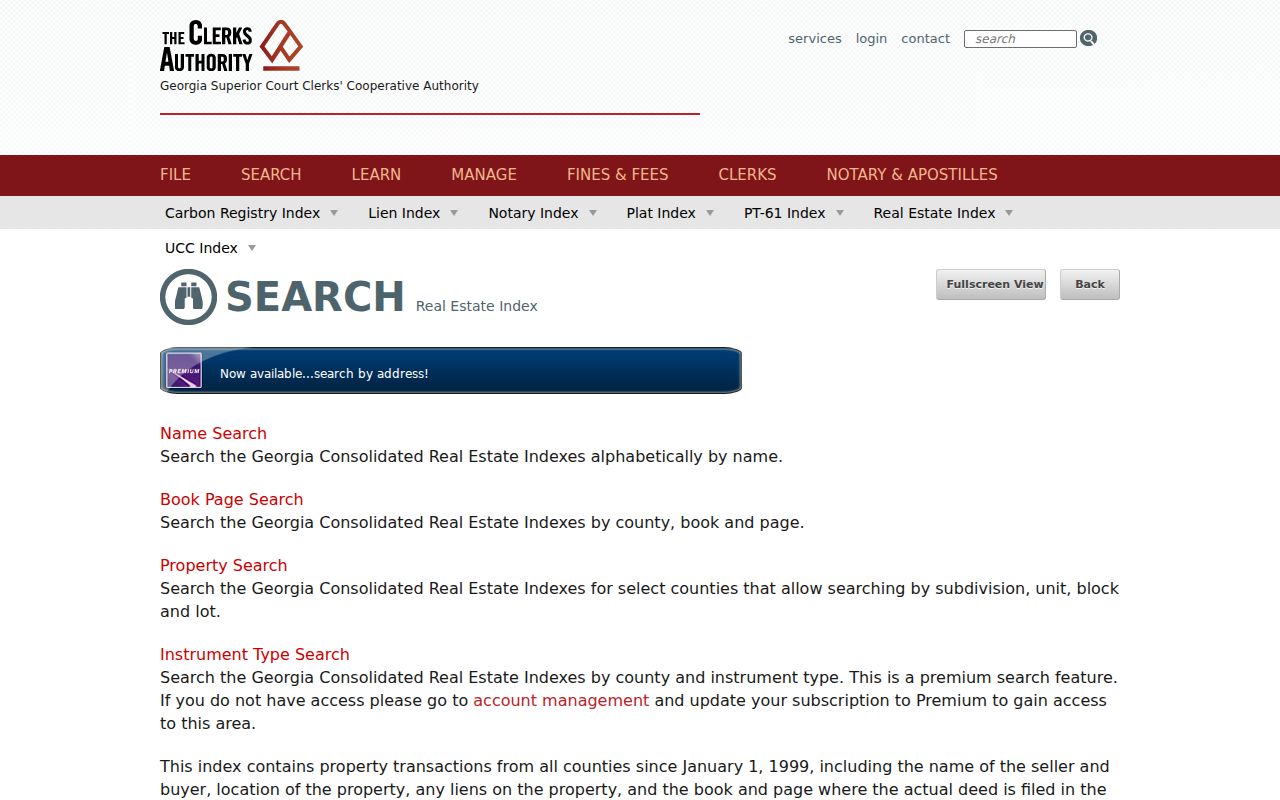
Its county, party-role, instrument, and date controls let a researcher narrow a loose name to one recorded transaction.
Fulton Court Names Need Context
A court name hit identifies a party to a case, not a current home. Fulton Superior Court covers felonies, divorce, equity, and general civil matters. State, Magistrate, Probate, Juvenile, and municipal courts keep distinct systems. Compare the court, case number, party role, filing date, case type, and disposition event. Never merge two people just because their names match.
The Georgia Courts E-Access gateway points to participating systems and warns that its provider may require an account. Local counters remain an access route for files or copies. Sealed, juvenile, and protected data will not appear in a public result.
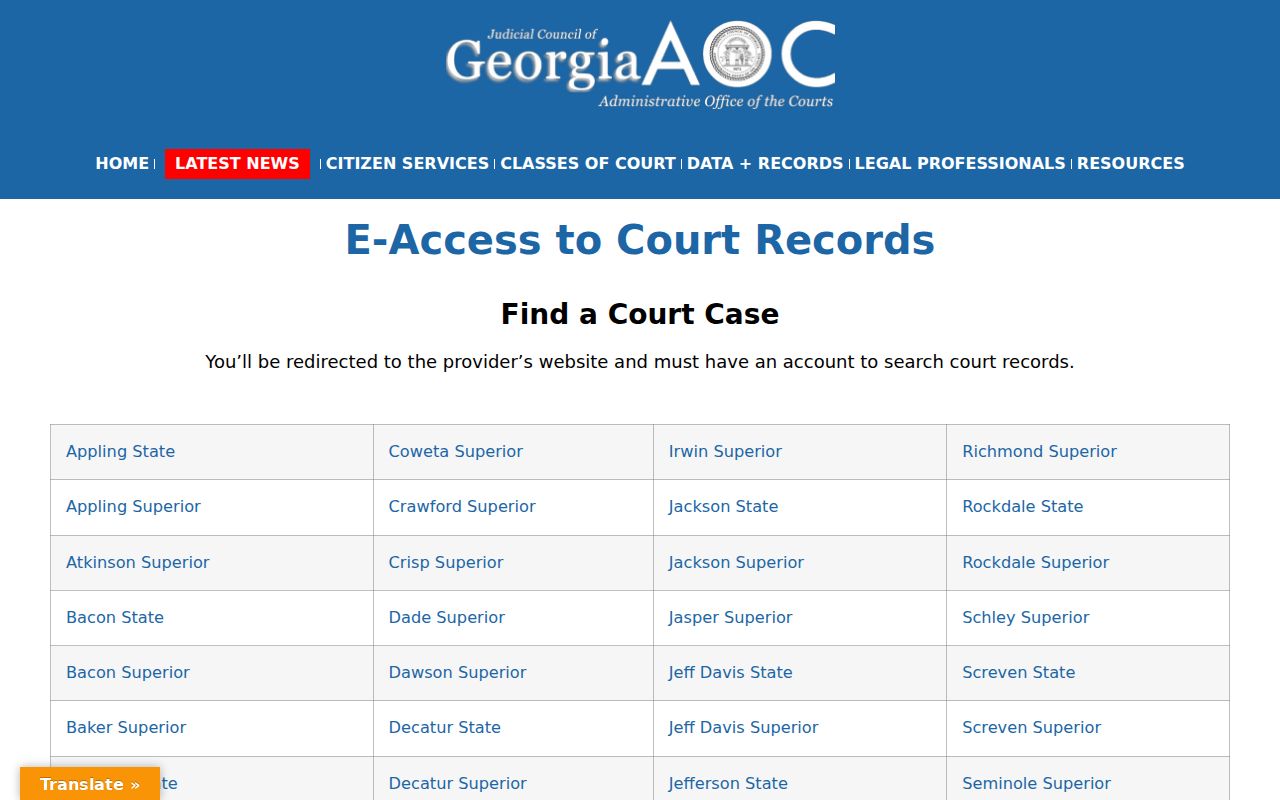
The gateway is an orientation tool; the court and case number remain the keys for a reliable request.
Current Fulton County Resident Rolls
No current source lists all Fulton County residents. The property roll covers owners, while deeds cover named parties to land instruments. Voter data covers registered voters within statutory limits. Government staff directories document public roles, not private households. Neighborhood contacts identify civic representatives and groups, not a private roster of everyone nearby.
| Source | Who It Lists | Keeper | Access |
|---|---|---|---|
| Property roll | Owners and tax mailing contacts | Board of Assessors | Free portal and counter |
| Voter information | Registered voters and districts | Georgia SOS and Fulton Elections | Self-lookup or paid lawful list |
| Real-estate index | Parties to deeds, liens, and plats | Superior Court Clerk | Index, account, or records room |
| Government directories | Officials and public staff roles | County and cities | Free online |
| NPU contacts | Public neighborhood representatives | City of Atlanta | Free public directory |
Use the roll that answers the narrow question. Ownership belongs in the assessor and deed record. Registration status belongs in elections records. A court role belongs in the court docket. The Fulton County resident lookup explains how to test one identity across those sources without turning a single match into an unsupported claim.
Georgia Voter Records in Fulton
Georgia My Voter Page is an individual verification service. It asks for a first initial, last name, county, and date of birth, then returns registration status, polling place, precinct, and districts on a match. It is not a browseable street directory and should not be tested with another person's private identifiers.
Public list orders are the lawful bulk route. The published file can include name, residence and mailing address parts, status, birth year, districts, and participation dates. It excludes full birth dates, Social Security numbers, driver-license numbers, phones, and ballot choices. Georgia does not register voters by party; a last-party-voted field refers only to a selected primary ballot.
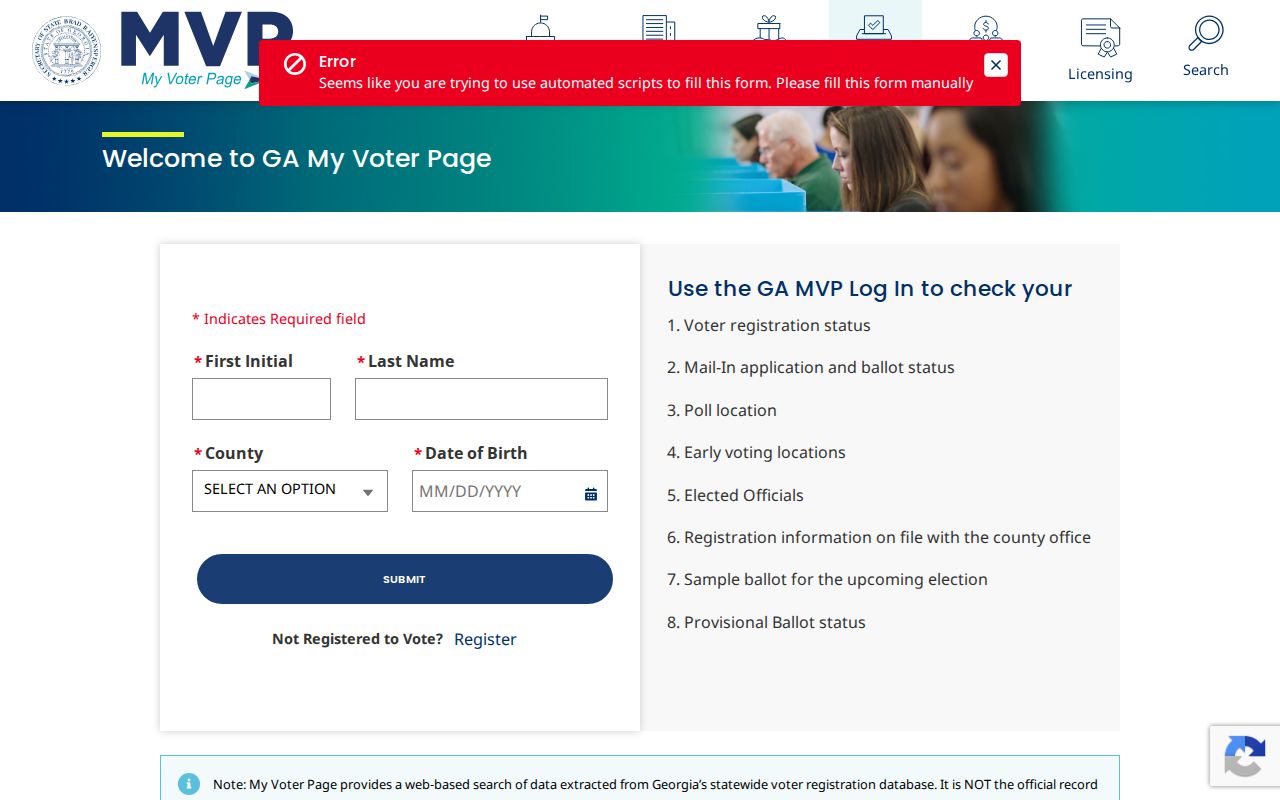
The form shows why MVP is meant for a known registrant, while county list orders follow a separate paid process.
Fulton Open Records Requests
The Georgia Open Records Act, O.C.G.A. §50-18-70 et seq., is a fallback for existing nonexempt agency records. An office ordinarily produces the record within three business days or sends a written timetable, cost estimate, and exemption citation. The law does not force an agency to create a new list or analysis.
Fulton's Open Records Center lets a requester submit, track, receive files, and communicate with staff. A useful request names the department, record type, subject or address, and date range. Court custodians have separate channels, so route a docket request to the clerk that holds it.
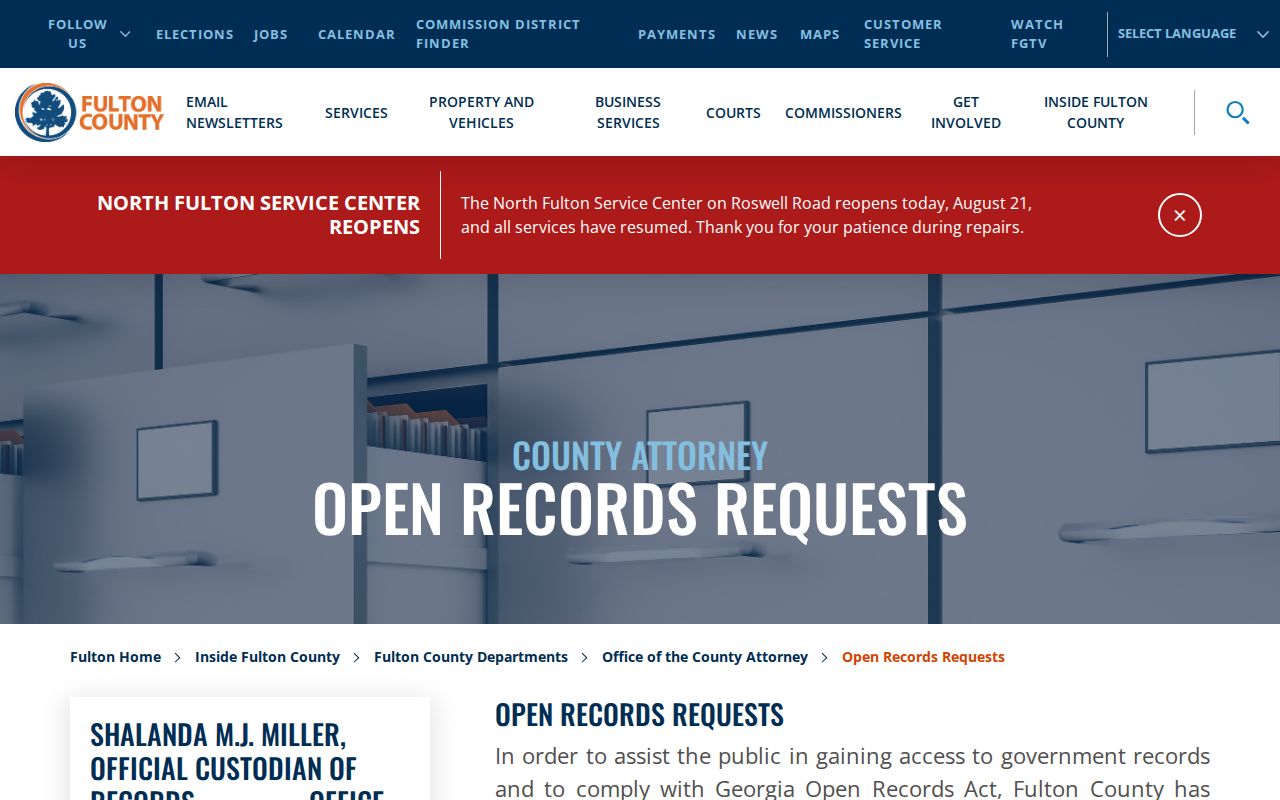
The portal's routing and tracking tools work best when the request seeks a defined record rather than a custom report.
Business Names in Fulton Records
A business address can help separate people with the same name, but it may be a registered office instead of a home. The Georgia Business Search can show the entity's legal name, control number, status, formation details, principal office, registered agent, and filing history. Fulton Clerk trade-name filings add the local DBA layer.
Professional license searches work in a similar way. They can confirm a public credential, status, issue or expiration dates, and discipline links where available. These records establish a role or affiliation. They do not by themselves establish present residence.
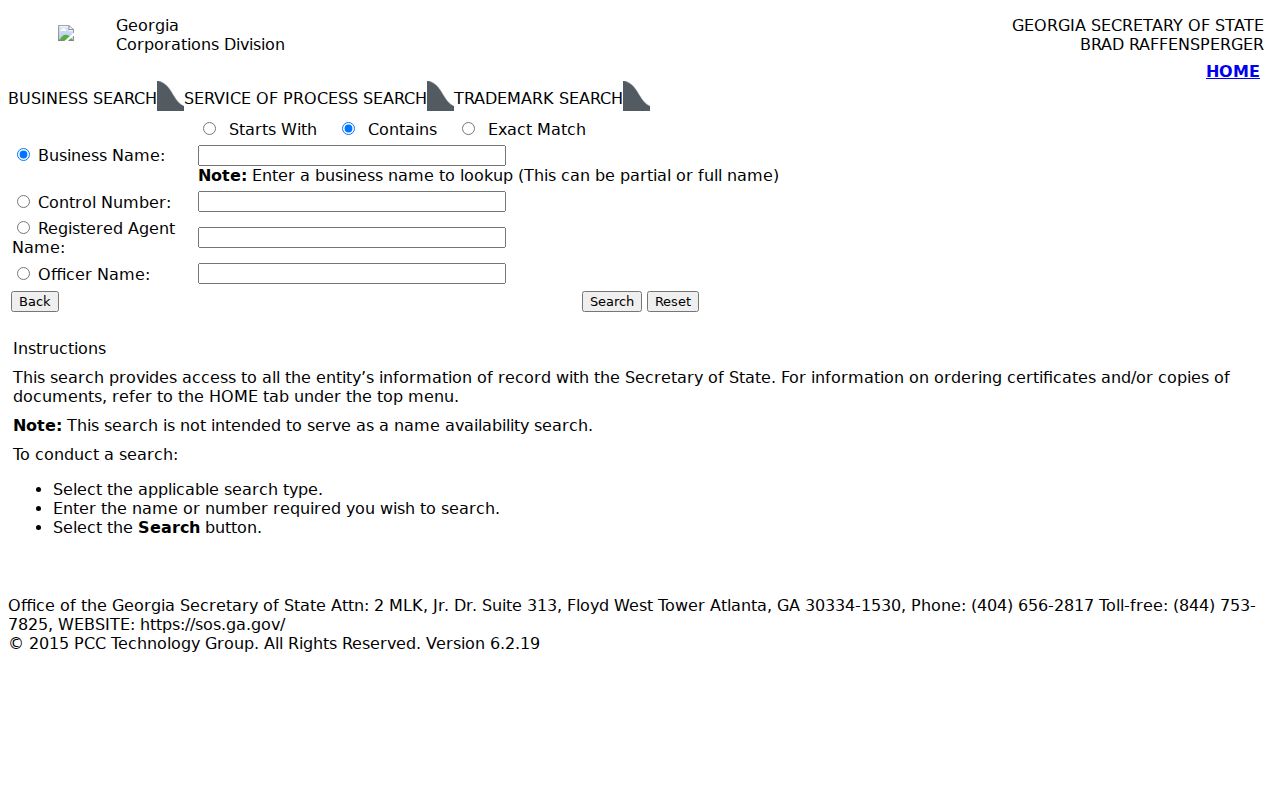
The official entity screen is most useful when its dates and addresses are checked against another dated Fulton record.
Two Sources for Fulton Names
Fulton's scale makes a same-name error easy. Compare at least two independent attributes, such as a middle initial, age or birth year, spouse, business link, parcel number, filing date, or precise geography. Atlanta street directions matter too. NE, NW, SE, and SW are not optional details, and the many Peachtree street names can produce convincing false matches.
- Roll
- An official list maintained for a public purpose, such as property assessment or voting.
- Index
- A finding aid that points to a deed or case; it is not always the complete document.
- Parcel
- A mapped unit of taxable land identified by a stable county number.
- Criss-cross directory
- A directory arranged by street address or phone number rather than only by surname.
Use Fulton resident records only for lawful personal research. Protected addresses, restricted certificates, and sealed cases must stay protected, and no record should be used to harass or harm anyone.
Fulton Vital Records Are Restricted
Birth, death, marriage, and divorce records do not form an open Fulton County residents directory. Georgia birth certificates require a direct and tangible interest under O.C.G.A. §31-10-26. Death certificates are available to eligible relatives or people who can show a qualifying interest, while the public may request a plain-paper copy with the Social Security number redacted. State birth and death holdings begin in January 1919.
Custody depends on the event. The Fulton County Board of Health and Georgia Department of Public Health issue birth and death records. Fulton Probate Court keeps marriage licenses. Superior Court holds divorce files. State marriage holdings cover applications and certificates from June 1952 through August 1996, plus verification records beginning January 1, 2014; other years go to Probate Court. Current DPH guidance lists $25 for a birth or death search and $10 for a marriage search.
Online ordering is only one channel. Eligible applicants can also follow DPH mail or counter procedures, and should bring the identity and relationship proof specified for the certificate. An index or verification can confirm an event, while a certified copy carries the custodian's formal authentication.
Fulton Records Before 1932
Present county lines can hide an older resident trail. Fulton County was created from DeKalb County in 1853. A person or parcel documented before that date may appear under DeKalb rather than Fulton catalog terms. Milton County merged into Fulton in 1932, shifting the provenance of north-county records. Campbell County also merged that year, which affects research in south Fulton.
Atlanta's own boundaries changed through annexation, while postal labels did not always track municipal limits. A modern Atlanta mailing address can sit in DeKalb County, Sandy Springs, East Point, or other postal territory. Confirm the current parcel jurisdiction first, then search the office that had authority when the older record was created. That method prevents a false conclusion that a family vanished when the catalog label simply changed.
The Georgia Archives, county deed books, Central Library collections, and historical maps provide the fallback when a modern online portal stops. Federal census schedules add household structure, but the 1890 population census was largely destroyed nationwide. Directories and property records can bridge the gap between the public 1880 and 1900 schedules.
Official Fulton Rolls Versus Profiles
Official records and commercial people-finding profiles answer different questions. A Fulton parcel card has a named custodian, fixed fields, and a date. A recorded deed points to an instrument that can be retrieved. A court docket ties a party role to a case number. Commercial profiles blend government, marketing, and other data without always revealing the source or the date of each claim.
| Source type | Strongest use | Main limit |
|---|---|---|
| Official Fulton roll | Confirm a specific dated fact | Covers only the roll's legal purpose |
| Library directory | Place a named past occupant in a year | May omit people or abbreviate names |
| Commercial profile category | Supply an unverified lead | Can be stale, merged, or inferred |
Use the source with the clearest custody and scope. Save the record date, exact name, parcel or case key, and the route used to retrieve it. If another record conflicts, do not average the claims. Check which office was responsible, which date each source describes, and whether the address is a home, mailing address, registered office, or situs.
Note: An official index can still contain errors, so a high-stakes fact should be confirmed with the custodian and the underlying document.
Historical Fulton County Directories
Central Library Special Collections holds Atlanta city directories from 1859-1860 through 1991, suburban directories from 1953 through 1986, and Haines Criss-Cross volumes from 1946 through 2016-2017. The runs can connect a name with an address, spouse notation, occupation, or nearby street sequence. They also preserve address changes that a modern parcel search cannot explain.
Walk-in access is available through Special Collections, with staff questions sent to Library.SpecColl@fultoncountyga.gov. Researchers working before Fulton County's creation in 1853 may need DeKalb records. North and south Fulton research before the 1932 mergers may shift to Milton or Campbell County catalog terms. The full shelf, abbreviation rules, census pairing, and map methods appear in the Fulton County city directory.
The county's record trail is broad, but it is not one master list. Dates, roles, and jurisdiction keep every result in its proper place.